Steelers 2026 Offseason: Coaching Changes, Practice Observations, and Rookie Insights
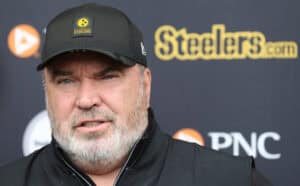
The Pittsburgh Steelers are in the midst of significant changes this offseason, shaping a new identity as the team embarks on a transition from the Mike Tomlin era to Mike McCarthy’s leadership. On my Monday Morning Conversation segment of the “Let’s Ride” podcast, the Pittsburgh Post-Gazette’s Chris Carter joined me to discuss everything from the differences between Tomlin and McCarthy, as well as other insights around the team after offseason workouts.
Below is a summation of the conversation, and you can hear/see the segment in the players at the bottom of the article.
The Hiring of Mike McCarthy: A Shift from Tradition
When the Steelers selected Mike McCarthy as their new head coach, many observers were caught off guard. Historically, the organization leaned toward younger, defensive-minded coaches taking on their first head coaching roles. McCarthy broke that mold, coming with significant NFL experience and previous success, including a Super Bowl win in Green Bay and multiple playoff appearances in Dallas.
Initial reactions were mixed. The decision-making process drew skepticism, but the Steelers were clearly aiming to maintain immediate competitiveness during a roster rebuild. There’s also evidence McCarthy is intent on instilling discipline and maximizing practice efficiency—expecting more from both players and coaching staff, reminiscent of Tomlin’s early years. McCarthy is laying down new rules but echoes a familiar intensity and detail orientation.
Practice Philosophy: Comparing McCarthy and Tomlin
Under Tomlin, practices were marked by his roving presence, engaging with different units and applying pressure where needed. Tomlin delegated specific position focus, particularly at quarterback, to his assistants—opting instead to watch for overall energy and cohesion.
McCarthy, however, demonstrates a striking contrast. He is deeply hands-on with the quarterbacks, particularly with younger players like Drew Aller and Will Howard. During drills, McCarthy provides direct, immediate feedback—running situational scenarios, breaking down footwork, and reshaping their approach play by play. He is less likely to micromanage defensive units, entrusting defensive assistants to get their work done while he invests his attention in molding the future at quarterback.
Structurally, practices still end with team periods like two-minute drills, but some traditions, such as the beloved “seven shots” drill, may be absent or less frequent. McCarthy seems to favor a greater focus on scheme and alignment over the hyper-physical “battle-testing” of previous camps.
Media Access and Communication
One notable shift since McCarthy’s arrival is an increase in practice secrecy—limited access for media compared to previous years. He diverges from Tomlin’s media-savvy style, sometimes offering lengthy, indirect responses. Both coaches are fiercely protective of their locker room, careful not to air internal matters or give away strategic hints, but McCarthy’s communication style is still becoming familiar to local reporters.
The Rodgers-McCarthy Dynamic
The past relationship between Aaron Rodgers and Mike McCarthy is a storyline carrying over to Pittsburgh. Early indications suggest a professional mutual understanding—both are veterans well-versed in each other’s systems. Rodgers advocated for McCarthy’s hiring and commands considerable respect in the building. As the season progresses, one question will be how their relationship weathers adversity, especially when pressure mounts in-game or in the face of losses.
Quarterback Room: Reality Versus Hype
Aaron Rodgers is undoubtedly QB1. Beyond him, there’s an ongoing debate—among both fans and media—regarding the potential of backups such as Will Howard and Drew Aller. Both have traits that intrigue the coaching staff: Howard is seen as more fundamentally sound, while Aller possesses impressive physical tools but needs refinement.
Despite offseason and preseason hype, expectations should be tempered; the likelihood of these young quarterbacks overtaking Rodgers or drastically changing Pittsburgh’s draft plans in the short term is slim, barring injury. The two are expected to develop behind the scenes, with their real test likely coming further down the road rather than in 2024.
From a roster management perspective, it’s anticipated the Steelers will only carry three quarterbacks, possibly leveraging a trade to resolve the logjam between Mason Rudolph and Will Howard, while retaining Aller’s developmental upside.
Rookie Class: A Long-Term Investment
With ten rookies in camp, the Steelers are clearly investing in their future. Most, however, won’t see significant playing time immediately. Top pick Max Iheanachor and fellow lineman Gennings Dunker are expected to spend time developing as backups, with a projected pathway to starting roles in the coming years.
Among the new faces, Germie Bernard (wide receiver) stands out as a potential immediate contributor, vying for the WR3 role alongside Roman Wilson. Special teams could see competition between Kaden Wetjen and 7th Round pick Eli Heidenreich, though Wetjen’s selection in the fourth round was seen as a gamble.
Defensively, players like Daylen Everette are blocked by established veterans and will likely develop slowly, barring injuries.
Defensive Outlook: Patrick Graham’s Vision
With Patrick Graham as the new defensive coordinator, a nuanced evolution is underway. While Graham isn’t seeking to erase previous schemes outright, he does aim to modernize the approach—which includes more use of two-high safety shells, confusion for opposing quarterbacks, and a heavier emphasis on disguised coverages. He credits past Steelers defensive greats but wants to adapt to the league’s current passing trends.
One key point of focus will be on continuing to stop the run, setting up favorable third-down situations, and then deploying creative blitzes and coverage wrinkles reminiscent of Dick LeBeau’s best defenses.
The Steelers’ offseason signals a blending of old-school roots and modern approaches. Mike McCarthy brings veteran savvy, while a new wave of rookies and strategic innovations on both sides of the ball point to a franchise actively rebuilding and reimagining itself. Immediate results may be uneven, but the groundwork is being laid for an exciting new era in Pittsburgh.
Check out Carter’s full thoughts and the conversation in the players below:



Heidenreich was drafted in the 7th round; he’s not a UDFA.
One of the most interesting aspects of the new coaching staff will be seeing how many of the rookies they prioritize keeping over the experienced players. Such as Heidenreich, Spears-Jennings, Howard, Rubio.