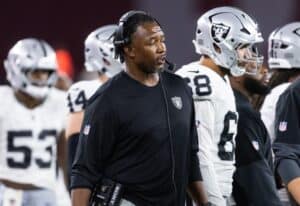
Patrick Graham will bring much-needed changes to the Steelers secondary
Stop me if you’ve heard this before:
The Steelers’ defense was predictable the past few years, particularly in the secondary.
Whether it was opponents like Ja’Marr Chase and Keenan Allen claiming they knew exactly what the Steelers were doing coverage-wise, or former players like Darius Slay remarking on how antiquated the scheme was, suggestions that a change was overdue were abundant.
In the breakdown I did below for my X account, I dug into Pittsburgh’s game against Green Bay last season to look at how the Packers repeatedly attacked the perimeter with RPOs and quick routes. Green Bay went back to this well time and again because they knew how the Steelers would line up to a particular formation or how they would (or sometimes wouldn’t) adjust to motion. They repeatedly out-schemed the Steelers to open up the flat, particularly with tight end Tucker Kraft. Kraft, who finished the season with 489 receiving yards, had nearly one-third of that total in the Pittsburgh game alone. He caught seven passes for 143 yards and two touchdowns, much of which came on simple flat routes or on routes where he was wide open against a seemingly baffled defense:
One feature of Patrick Graham's defense I look forward to in PIT is his ability to disguise coverage and minimize predictability.
That wasn't always the case with Teryl Austin. Here's a breakdown of how opponents often diagnosed Austin's scheme and were able to exploit it. pic.twitter.com/eXe4gYykb2
— Kevin Smith (@KTSmithFootball) May 29, 2026
It’s not that the Steelers didn’t vary their coverages in recent years. They did. Almost too much. In one game last season, a 33-31 loss to Cincinnati in Week 6 in which Chase torched them for sixteen receptions, Pittsburgh played a dozen different coverages. The issue wasn’t variety. It was when those coverages were called, and the team’s ability to execute them well.
No one is promising new defensive coordinator Patrick Graham will fix every issue with Pittsburgh’s defense. But eliminating predictability and making quarterbacks and opposing offensive coordinators a little less comfortable would be a great place to start. Fortunately, that’s one of Graham’s strengths.
Graham bases out of a split-safety scheme on most snaps, meaning two-high safeties who align anywhere between eight and twelve yards deep. This makes the defense extremely vanilla prior to the snap. You may think, isn’t that more predictability? It would be if Graham stayed in those two-high shells. However, he loves to move out of them post-snap, scrambling his personnel on the fly and forcing quarterbacks to figure out coverage as a play evolves. I did a breakdown on how the split-safety scheme works in the video below:
One of the takeaways from Steelers’ OTAs is that new DC Patrick Graham will base out of split-safety looks, which is a big departure from Mike Tomlin’s single-high scheme.
Here’s a crash course on split-safety defense, and how the back end will look different this year in PIT: pic.twitter.com/zDohIdBuvQ
— Kevin Smith (@KTSmithFootball) May 22, 2026
Here is Graham’s defense in Las Vegas from their contest against Denver last season, a game in which the Raiders held the Broncos’ high-powered offense to ten points and 150 passing yards. Quarterback Bo Nix struggled to diagnose coverage, throwing two interceptions and often being late or inaccurate with the football.
On this one, Graham aligned in his typical two-high shell in what appeared to be a cover-6 look, which a combination zone. At the snap, he dropped a safety and played cover-1 (man-to-man). Initially, Nix looked at his Stick concept to the trips side, which is a good route against quarters coverage. Only after the snap did Nix realize it wasn’t quarters. Once he diagnosed cover-1, he came off the Stick and tried to throw backside to his single receiver. But the timing was off, and the ball should have been intercepted:
(1/2) Really diving in on Patrick Graham’s defense this week.
One aspect of Graham’s split-safety shell I like is the ability to disguise coverage.
Here, LV moves from a pre-snap cover-6 look to post-snap cover-1. DEN runs Stick, which is good to the quarters side, but the… pic.twitter.com/Q0ve28SPUb
— Kevin Smith (@KTSmithFootball) June 8, 2026
Here’s another clip from that game in which Nix was intercepted. It’s the same coverage rotation from Graham, this time paired with a five-man pressure. Nix was forced out of the pocket by the rush and chucked up a ball deep that was picked off. That’s the thing about post-snap rotations that can make them so effective: when a quarterback is confused, he often makes bad decisions.
Here’s that split-safety rotation again from Vegas.
Looks like cover-6 pre-snap. Post-snap the field safety comes down on #3 and the boundary safety rotates to deep middle. Nickel and CB’s lock on. Graham brings five to create pressure and hurries Nix into a bad decision/INT. pic.twitter.com/61v8qLVqtC
— Kevin Smith (@KTSmithFootball) June 8, 2026
Teryl Austin used a good amount of these post-snap rotations as well, just without much success. This was often because the Steelers could not get on the same page in executing them, leading to consistent coverage breakdowns. Graham’s ability to teach the scheme will be essential to its success. With a couple of tweaks in personnel, he should have more reliable pieces to operate with.
One such piece is safety Jaquan Brisker. Graham has stressed versatility and positional flexibility as traits he wants in his players. Brisker has those attributes. He and his playing partner at safety, DeShon Elliott, have been deemed interchangeable by Graham. Both can play in the sky or in the box, defend the pass and the run, and are high-IQ players who will help the defense get organized. Brisker manned a multitude of roles in Chicago, where he played four seasons with the Bears, so moving around the defense in Pittsburgh will not be new to him. He is a major upgrade over players like Juan Thornhill, Chuck Clark and Kyle Dugger, whom the Steelers tried (unsuccessfully) to patch in at safety last season.
Jaquan Brisker thread (1/2).
Really excited to see how Patrick Graham puts Brisker to use this year.
Here’s Brisker in CHI.
1st clip: Aligns in a two-high shell (#9, top of the ‘C’) then rotates down to play man in the flat.
2nd clip: Aligns at the LOS and blitzes off the… pic.twitter.com/LZ72OQ1ZOp
— Kevin Smith (@KTSmithFootball) June 1, 2026
Another piece is the return of Jalen Ramsey to the slot, where he has been very effective throughout his career. When Elliott was injured last season, and Thornhill and Clark struggled, Ramsey was moved to safety. He played decent football there, but it took him out of his natural position and it forced the Steelers to play Brandin Echols as their nickel. Echols held his own until the playoffs, when Houston’s Christian Kirk went off, beating Echols in man coverage for 125 receiving yards. Having Ramsey back in the slot will give the Steelers a tough run defender and a veteran whose coverage skills may not be what they were in his prime, but remain sound.
On the outside, Graham will have cornerback Jamel Dean, a prized free agent signing, to pair with Joey Porter Jr. Dean and Porter finished first and third, respectively, in the NFL last season in opposing QBR when targeted in man coverage. Meaning, they were two of the three toughest defenders in the league to throw against when playing man-to-man. Both are big, long and physical and will be excellent press defenders in Graham’s split-safety scheme.
The football intelligence of the secondary, combined with the upgrade in overall talent, makes it a unit poised to take a big leap this season.
We shouldn’t set the bar too high on Graham’s defense. All new systems have kinks to work out, and take time for the players to master. But the combination of scheme and talent on the back end this season could signal major improvement ahead for the Steelers.
For a deep dive into the X-and-O’s of the Steelers, tune into my “Steelers’ Chalk Talk” podcast every Thursday morning at 11 AM. This week, we will dive deeper into Graham’s split-safety scheme, his favorite coverages, and what we should expect from the pass defense in Pittsburgh.



While the points yielded per game (22.8) were mediocre (17th in league), the yards yielded per game were 26th in league (356.9). Those 27 turnovers (4th in league) performed a lot of heavy lifting, particularly in two games. Room for improvement exists.
I feel a lot of the issues in the secondary last year came down to injuries. How well Graham can get the 2nd & 3rd stringers up to speed is more important than the guys slated to start. You can just look at the numbers with Elliot in the game and the numbers without him to show that very clear drop-off.
I also worry a bit about being able to stop the run without stuffing the box. The Steelers were very hit or miss against the run. Anyone remember that Bills game? I think most people selectively forgot that game. For good reason too.
Often when I’m reading a book, I’ll form a question in my mind about some aspect of the plot that seems supect. A great writer recognizes that will happen and makes the effort to anticipate and answer those questions so they don’t linger.
–
As I was watching your video, I started getting that feeling because a lot of what I saw didn’t necessarily seem to be the scheme, rather the players inability to execute it. I appreciate that you answered those questions both in the video in your writeup.
For example:
It’s not that the Steelers didn’t vary their coverages in recent years. They did. Almost too much. In one game last season, a 33-31 loss to Cincinnati in Week 6 in which Chase torched them for sixteen receptions, Pittsburgh played a dozen different coverages. The issue wasn’t variety. It was when those coverages were called, and the team’s ability to execute them well.
No one is promising new defensive coordinator Patrick Graham will fix every issue with Pittsburgh’s defense. But eliminating predictability and making quarterbacks and opposing offensive coordinators a little less comfortable would be a great place to start. Fortunately, that’s one of Graham’s strengths.
That was well written and gives me some things to definately watch for as the seaosn progresses and the new staff either exceeds expectations or misses on them.
I’m looking forward to your writups through the year and hope this is a theme you come back to, regardless of whether the team is successful or not (though I hope they are)
Good stuff.
Would be nice to see a follow up after the Bye week, as well one at seasons end if possible.
Appreciate that! Thanks for the comment.
Would hope to see improvement due to the additional players added. Corner was meh last season besides JP and the safety room was not impressive
a true Pittsburgh Steelers fan, since the 70’s defensive coordinator Patrick Graham do the smart thing get rid of Jalen Ramsey he’s not helping the Steelers defense he’s hurting the Steelers defense because he’s too old, too slow and can’t cover anybody and the Steelers defense needs a slot safety and a slot CB to cover the middle of the field
a true Pittsburgh Steelers fan, since the 70’s also the Steelers secondary still needs to fill and fix the Steelers secondary still needs to continue to get younger, bigger, faster, physical, and can cover and tackle, quicker